Skip to content
Clear communicationFree inspections
Call now (212) 555-0132
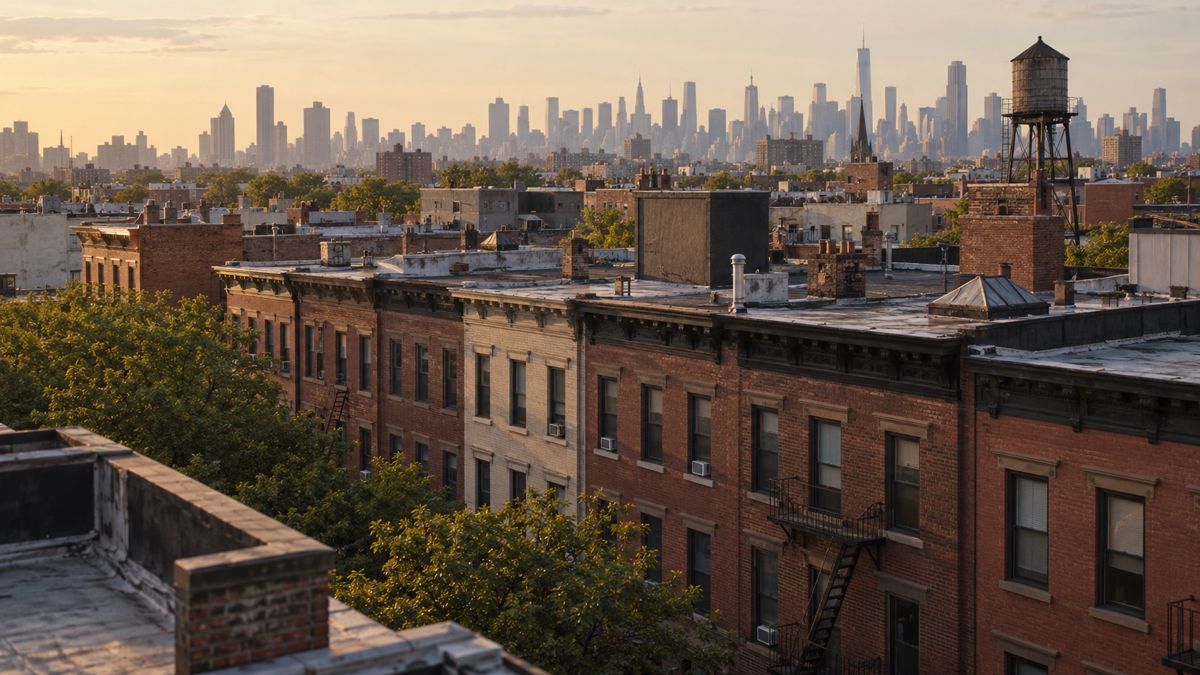
Brooklyn row house rooftops in late afternoon light

Rooftops, terraces and tight street access

Roofing contractor in Manhattan, New York

Roofing for Manhattan townhouses, co-ops, condos and commercial buildings. Request a quote to confirm availability and approvals.

  • Row houses, brownstones and low-rise buildings
  • Flat roof and pitched roof work
  • Written quotes before any work starts

Step 1 of 3

What do you need?

Clear communication
Free inspections
Written estimates
Local crew

Manhattan roofs are complex and crowded

A Manhattan roof is rarely just a roof. Townhouses have skylights, chimneys and cornices. Mid-rise buildings have bulkheads, water tanks, mechanical units, antennas and terraces. Each of these is a penetration or an edge where water can enter if the flashing fails.

Because buildings stand shoulder to shoulder, roofs also meet neighbors' walls, and the seam between them is a frequent leak line. Many problems turn out to involve not the flat field of the roof but the details at the edges, around equipment and at the junction with another building.

Logistics: hoists, sidewalks and permits

Working in Manhattan is mainly a logistics exercise. Materials arrive by truck on busy streets with limited stopping space, and hoisting may require sidewalk protection, a closed lane or a crane, each with permit conditions. Noise and work hours follow city rules and building policy.

Open-flame roofing methods are regulated, and many buildings prefer systems applied without torches. We ask early about access, elevator use and rooftop restrictions. A short conversation with the building superintendent before the visit often saves days later, and it makes the schedule more realistic.

Elevator rules and loading hours differ between buildings, so ask the superintendent early.

Services we can quote for Manhattan buildings

Whatever the size of the building, the services are the same ones, adjusted for scale.

If your building has more than one roof level, mention each in your request.

Most large Manhattan buildings are co-ops or condos. A roof project usually goes through the board and managing agent, and may require alteration agreements, insurance certificates and a set schedule. City filings with the Department of Buildings may apply, depending on scope.

We provide a clear scope, a list of materials and a work plan that you can pass on to your board. Landmark districts add another layer for visible roofs and cornices. We cannot decide what the city or your building will approve, but we can help you ask the right questions.

What affects the cost of a Manhattan roof

Access and logistics weigh heavily. Hoisting, protection, work hours and the number of floors to carry materials all add cost. Roof area, insulation thickness, drains and the number of penetrations come next.

Terraces and green roofs add layers, including pavers, planters and drainage. Removing and resetting them takes time. Old roofs may hide wet insulation, which is found only after opening up. We explain these variables up front and mark which items depend on what is found below the surface.

We also note which items are fixed and which depend on what is found when the old roof is opened.

Requesting a Manhattan roofing quote

Send the building address, the type of property, who manages it and photos of the roof or interior stains. We confirm availability, then arrange a site visit with the superintendent or managing agent.

We inspect the roof, record findings with photographs and write a quote that explains the work, materials and schedule. Boards can ask for clarification, and we respond promptly. Use the contact page to start, and read more about our approach on the about page.

If a managing agent handles the building, give us their contact details and we will coordinate directly.

Get a quote in Manhattan

Tell us what you need and we call you back.

Step 1 of 3

What do you need?

No obligation.

Questions about Manhattan

Can a townhouse roof be done without a crane?
Often yes. Materials can be carried up through the building or lifted from the street with a small hoist, depending on size and access. Larger buildings may need a crane or a larger hoist and a permit. We look at the access during the visit and tell you which method fits.
What roofing systems are common on Manhattan buildings?
Modified bitumen, single-ply membranes such as TPO and EPDM, and built-up roofs are all used. Which suits a building depends on weight, rooftop use, fire rating and what the board prefers. We explain the options and the trade-offs in plain language. Fire ratings and weight limits also play a part in the choice.
Can terraces and pavers stay in place during a project?
Usually pavers, planters and furniture need to be lifted so the membrane underneath can be repaired or replaced, then reset afterward. Careful planning keeps this efficient. We discuss what must be moved, who handles it and how long the terrace is out of use. We label and store the pieces so they go back where they came from.
Do you work with managing agents and boards?
Yes. We provide written scopes, photographs and clear schedules, and we can attend a meeting if asked. We also supply the paperwork the building asks for, such as insurance details, once we agree on the work. Our aim is to make the board's decision easier. We also give the board a plain summary page.
Is a roof inspection worth doing before buying an apartment?
For a co-op or condo, the roof belongs to the building, but its condition affects assessments and repair costs. Reading the building's records and having the roof inspected can reveal upcoming expenses. A written report helps you ask informed questions before committing. Ask to see recent board minutes about roof work as well.