Skip to content
Clear communicationFree inspections
Call now (212) 555-0132
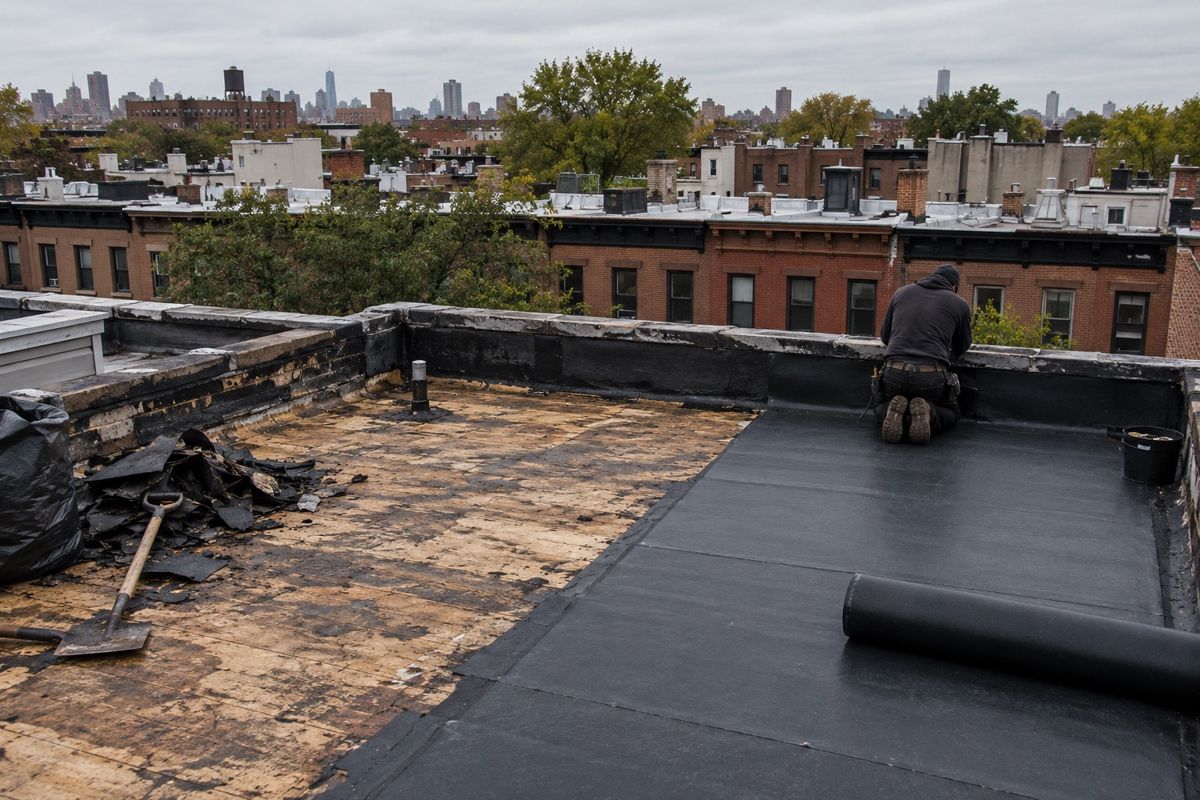
Flat brownstone roof half stripped and half covered with new membrane

Roofing in New York City, NY

Roof replacement in New York City for row houses and flat roofs

A new roof system for flat, low-slope and pitched roofs. You get the scope and price in writing before work starts.

  • Flat, low-slope and pitched roofs
  • Drains, parapets and flashing included in the plan
  • Written scope, line by line

Step 1 of 3

What do you need?

What does a roof replacement in New York City involve?

A full roof replacement means taking the old roof down to the deck, repairing what is underneath and installing a new roof system. On a New York City row house or small apartment building, that often means a flat or low-slope roof with several layers of old material on it.

A crew typically removes the old membrane or shingles, checks the deck and flashing, replaces wet or rotted sections and then installs the new system, drainage and edge details. Parapet walls, bulkheads, skylights and roof hatches all need fresh flashing so water cannot get behind them.

If you only have one leak, a roof repair may be enough. A replacement makes more sense when leaks keep coming back in different places or the material is worn through.

What kinds of roofs do New York City buildings have?

Housing varies a lot between the boroughs, so the roofs do too.

  • Row houses and brownstones in Brooklyn, Queens and Manhattan often have flat or low-slope roofs with a membrane or built-up system, a parapet and a roof hatch.
  • Two-family homes in Queens, the Bronx and Staten Island often have pitched roofs with asphalt shingles.
  • Co-ops, condos and walk-up apartment buildings usually have larger flat roofs shared by many owners.
  • Northern New Jersey towns such as Jersey City, Hoboken and Bayonne have similar row houses and low-rise buildings.

Flat roofs are not truly flat. They are built with a slight slope so water runs to drains or scuppers. When drains clog, water sits on the roof and the material ages fast.

What affects the cost of a new roof in New York City?

No two roofs cost the same, and we do not post prices on a web page. These are the things that move a quote up or down.

  • Roof size and how many stories up it sits.
  • The system you choose, such as modified bitumen, single-ply membrane or shingles.
  • How much old material has to come off and how much deck needs repair.
  • Access for crews and materials, including street access, hoisting and storage space.
  • Details such as parapets, skylights, drains, chimneys and bulkheads.
  • Permits, inspections and any building rules that apply.

For an actual figure, ask for a written quote that lists the scope line by line. Compare quotes on scope, not just the bottom number, because two quotes can cover very different work.

Time depends on roof size, weather and access. A small row house roof can take a few days. A larger building takes longer. The written quote should give a realistic window, and wet weather can move it.

On the first day a crew typically sets up protection around the building, covers entrances and starts removing old material. Expect noise, ladders or hoists, and debris containers on the street or in a yard. Tell your neighbors ahead of time, especially in attached row houses where the roof meets the building next door.

Once the deck is clean and dry, the new layers go down, followed by flashing, drains and edges. A final walk-through checks the details before cleanup.

When should you call, and what should you ask first?

Call when leaks return after repairs, when ceiling stains keep growing, when you see bare spots, blisters or open seams, or when a report says the roof is near the end of its life. If you are unsure, a roof inspection gives you a clear picture first.

Before you hire anyone, ask to see their licence and insurance, ask who files permits with the Department of Buildings when one is required, and ask for the scope in writing. In a co-op or condo, check with the board or managing agent about alteration rules. Rules differ by building and location, so confirm the details for your own property.

You can also start from our home page to see everything we cover.

Clear communication
Free inspections
Written estimates
Local crew

Questions about roofing in New York City

How do I know my roof needs replacing and not just repair?

Repeated leaks in different spots, widespread blistering or cracking, soaked insulation and open seams all point toward replacement. One leak at a known detail, such as a flashing corner, usually points toward repair. An inspection tells you which case you are in before you spend money on either.

Do you replace flat roofs on row houses?

Yes. Flat and low-slope roofs on row houses and brownstones are common in the city. These jobs involve parapets, drains, roof hatches and shared walls, so the plan has to cover those details as well as the main roof surface. We write the scope out so you can see what is included.

Will I need a permit for a roof replacement?

It can depend on the building and the scope of the work. Some roof replacements need a Department of Buildings permit, and some projects have other requirements. Ask your contractor who files, and confirm the rules for your property. In co-ops and condos, board approval is often needed too.

Can I stay in the building during the work?

In most cases yes, since work happens on the roof, but there will be noise and some vibration. Top-floor tenants may notice it most. For occupied buildings, the plan should cover access, protection of entrances and how residents are told. Ask about this when you get your quote.

What roof materials are common in New York City?

On flat roofs, modified bitumen, built-up roofing and single-ply membranes are common. On pitched roofs, asphalt shingles are the usual choice, with slate or metal on some older homes. The right choice depends on the roof shape, budget, building rules and how long you plan to own the property.

How it works

  1. Call or request a quote

    Tell us what is happening with the roof.

  2. Free inspection

    A roofer checks the roof and gives a written price.

  3. Work done right

    Clean crew, nail sweep, warranty in writing.

Request roof replacement

Tell us what you need and we call you back.

Step 1 of 3

What do you need?

No obligation.

Ready when you are

Call now or request a quote online.

(212) 555-0132
Get my free quote