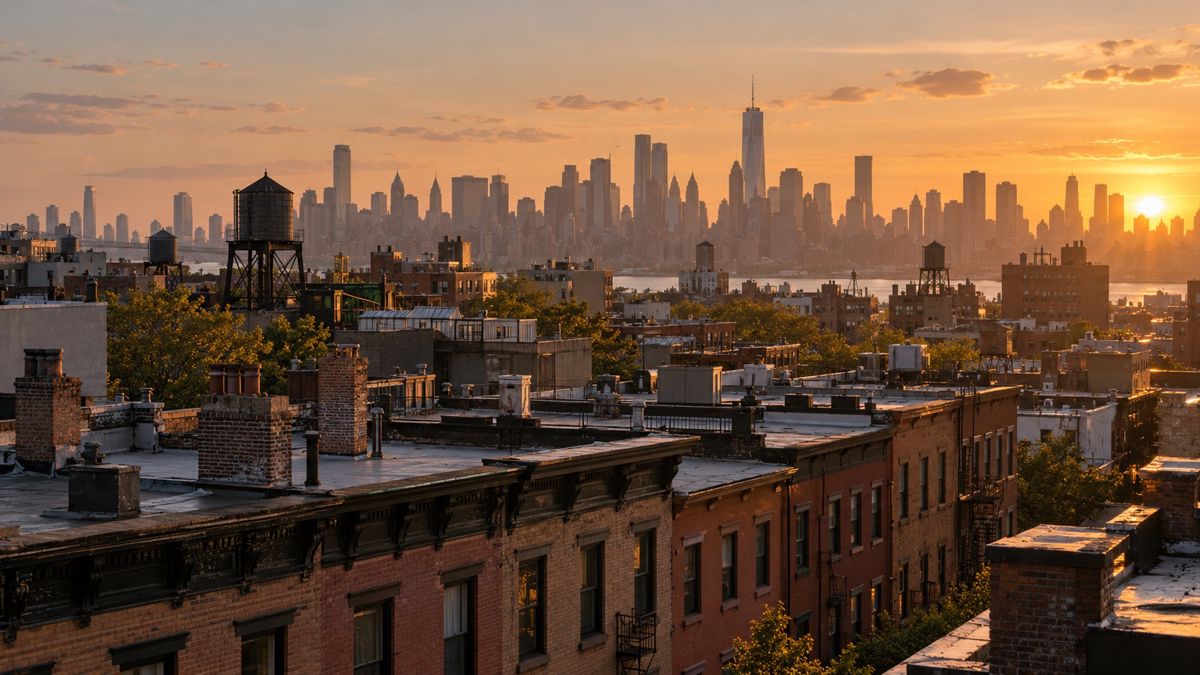
For a typical New York City row house with a flat roof, a full replacement often lands somewhere in the low to mid five figures. A small pitched roof on an outer borough home can cost less, and a large or complicated building can cost much more. Those are rough guides, not quotes from this business. The real number depends on your roof, your access and the scope of work.
What does a new roof cost in New York City?
Prices in this city run higher than the national average. Labor is more expensive, materials have to be moved through tight streets, and permits and insurance add cost. As a broad market guide, roofing in the United States commonly runs from about $5 to $15 or more per square foot of roof, depending on the system, and New York City jobs tend to sit at the upper end of that range or above it.
Here is a rough way to think about it for common building types.
- Row house or brownstone with a flat roof: often roughly $8,000 to $20,000 or more, depending on size, layers to remove and parapet and drain work.
- Pitched shingle roof on a two-family home: often roughly $10,000 to $25,000 or more, depending on size, slope and number of stories.
- Larger apartment or mixed-use roof: very wide range, from the tens of thousands upward, and it needs an on-site look.
Treat these as starting points for planning. Anyone who gives you an exact figure without seeing the roof is guessing.
What drives the price of a roof in the five boroughs?
The same few factors show up on almost every quote.
Size and shape
More roof area means more material and more labor. Roofs with many levels, bulkheads, skylights and chimneys take longer than a simple rectangle.
Access and logistics
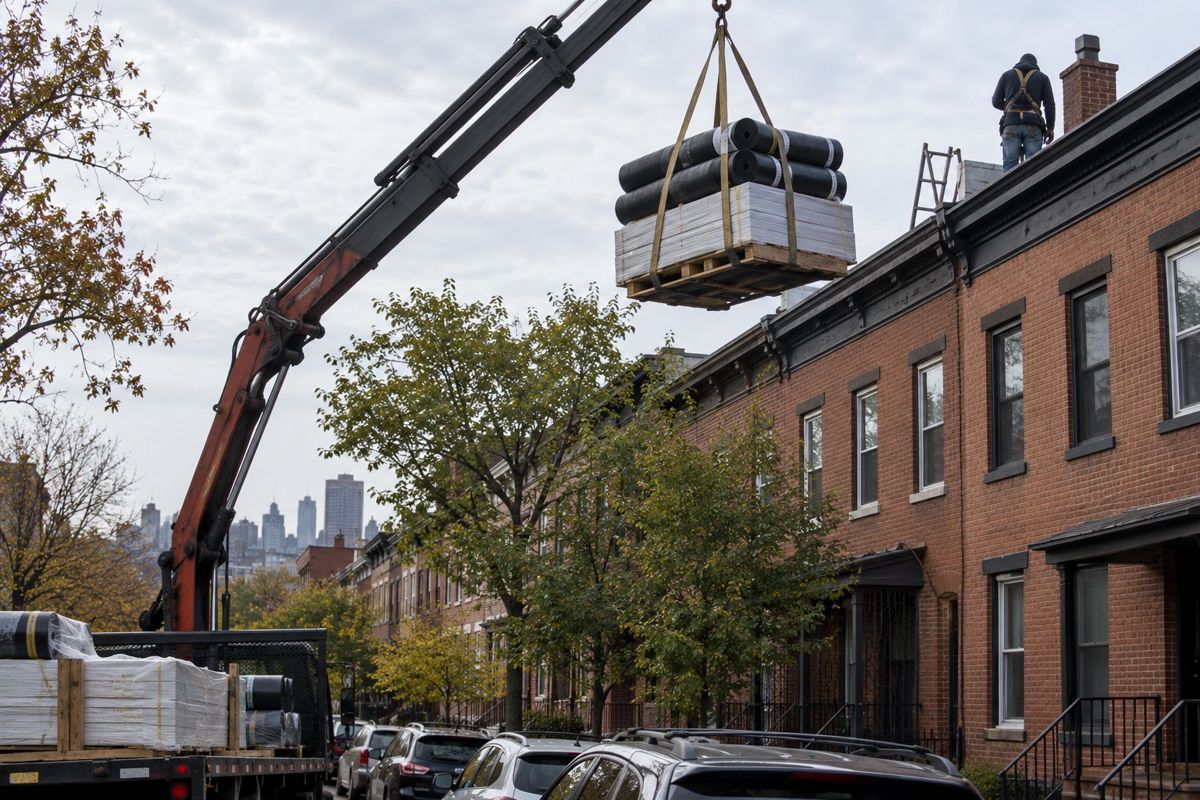
This matters more in New York City than almost anywhere else. If materials must be carried up through a hatch, lifted from the street or staged on a sidewalk, the job costs more. Street closures, parking restrictions and shared walls all add planning time.
Condition of what is underneath
Once the old roof comes off, the crew sees the deck. Rotted boards and wet insulation have to be replaced, and that can change the final price. A good quote explains how this is handled.
Details and drainage
Parapet flashing, new drains, coping and roof hatch work can add a lot. These are the details that decide whether a flat roof leaks in five years or lasts much longer.
How do flat roof and pitched roof materials compare?
Most city row houses have flat or low-slope roofs, so the main choices are membrane systems.
- Modified bitumen: layered sheets that are common on row house roofs. Strong and well understood.
- Built-up roofing: several layers of felt and asphalt. A long track record in the city.
- Single-ply membranes such as TPO or EPDM: lighter systems, often chosen on larger flat roofs.
Pitched roofs usually use asphalt shingles, with slate or metal on some older homes. Slate and metal usually cost more up front. The right choice depends on the roof shape, your budget and how long you plan to own the building. Ask each contractor why they recommend a system and what the written scope includes.
Do you need a permit, and how do co-ops and condos change things?
Some roof work in New York City needs a permit from the Department of Buildings, and some does not. It depends on the building type, the scope of work and the rules in force at the time. The contractor or a filing representative usually handles the paperwork, but you should ask who is responsible and whether the fee is in the quote.
Building and energy rules can also affect a roof replacement, for example requirements about reflective roof surfaces or solar and green roof elements on some projects. These rules change, so confirm them for your property.
In a co-op or condo, the building usually owns the roof. That means board approval, a managing agent and often a capital plan. Ask for quotes in the format your board prefers. In northern New Jersey towns such as Jersey City or Hoboken, local permit rules are separate from New York City, so check with the town.
How can you compare quotes fairly?
Three quotes with three different prices usually mean three different scopes. Compare them line by line.
- Does each quote say how many layers will be removed?
- Does it include deck repair, and at what unit price if more is needed?
- Are parapet flashing, drains and coping included?
- Who files permits and who pays for them?
- What is the warranty on materials and on labor, and is it in writing?
- How is cleanup handled?
Ask to see each contractor's licence and insurance. Home improvement contractors working on residences in the city are expected to hold a licence from the city's consumer agency, and there are other rules for commercial work, so ask what applies and ask for proof. Be careful with large deposits and with anyone who pressures you to sign the same day.
How long does a new roof last, and how do you know it is time?
Lifespan depends on the system, the installation and maintenance. Asphalt shingles commonly last somewhere between fifteen and twenty-five years, and many membrane roofs last a similar span or longer when drains are kept clear and problems are fixed early. These are general figures, not guarantees.
Signs it may be time include:
- Leaks that return after repairs, in more than one spot.
- Blisters, cracks or open seams across large areas.
- Water that ponds for days after rain.
- Soft spots underfoot or stained ceilings on the top floor.
- Shingles that curl, crack or shed granules.
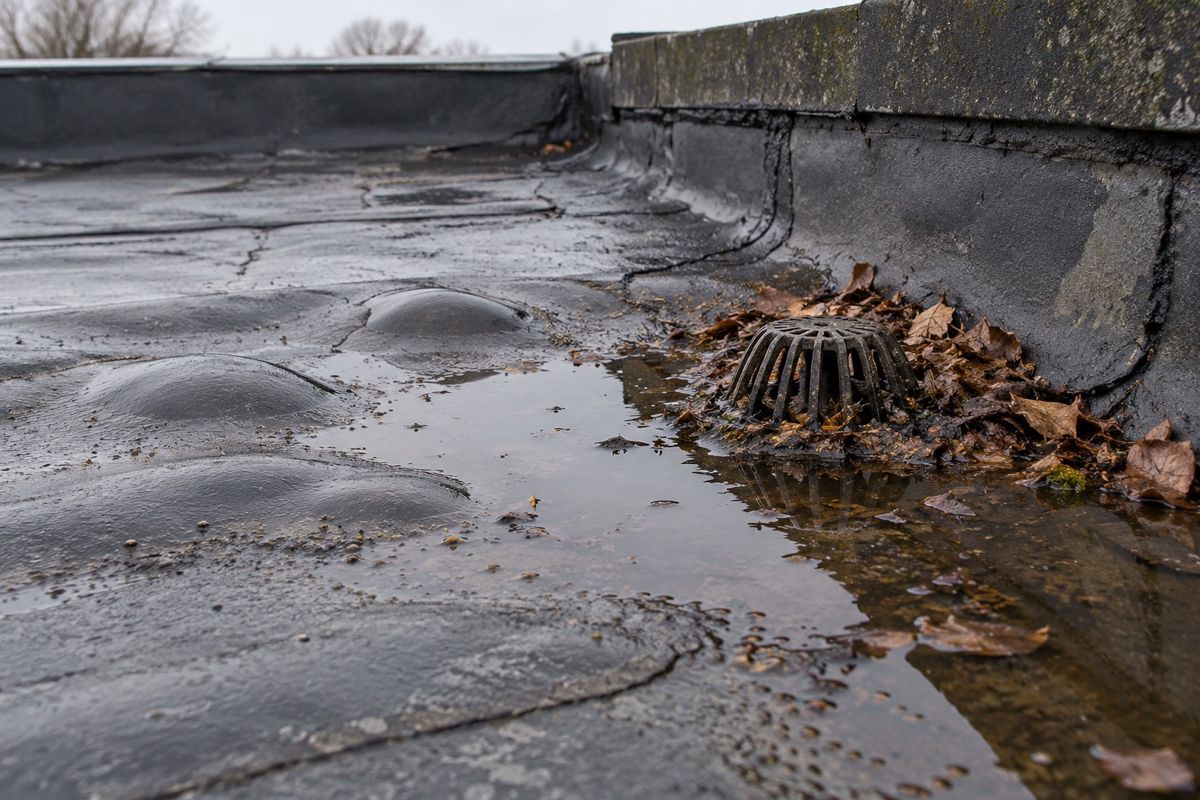
If you are not sure, a roof inspection costs far less than a wrong decision in either direction. It tells you whether you need a small fix or a full replacement.
What should you do next?
Start by getting the roof looked at and the scope written down. If you already know the roof is worn out, read about roof replacement in New York City to see what the job involves. If you only have a leak, look at roof repair first. Either way, ask for a written quote, check the contractor's licence and insurance, and take your time before you sign.